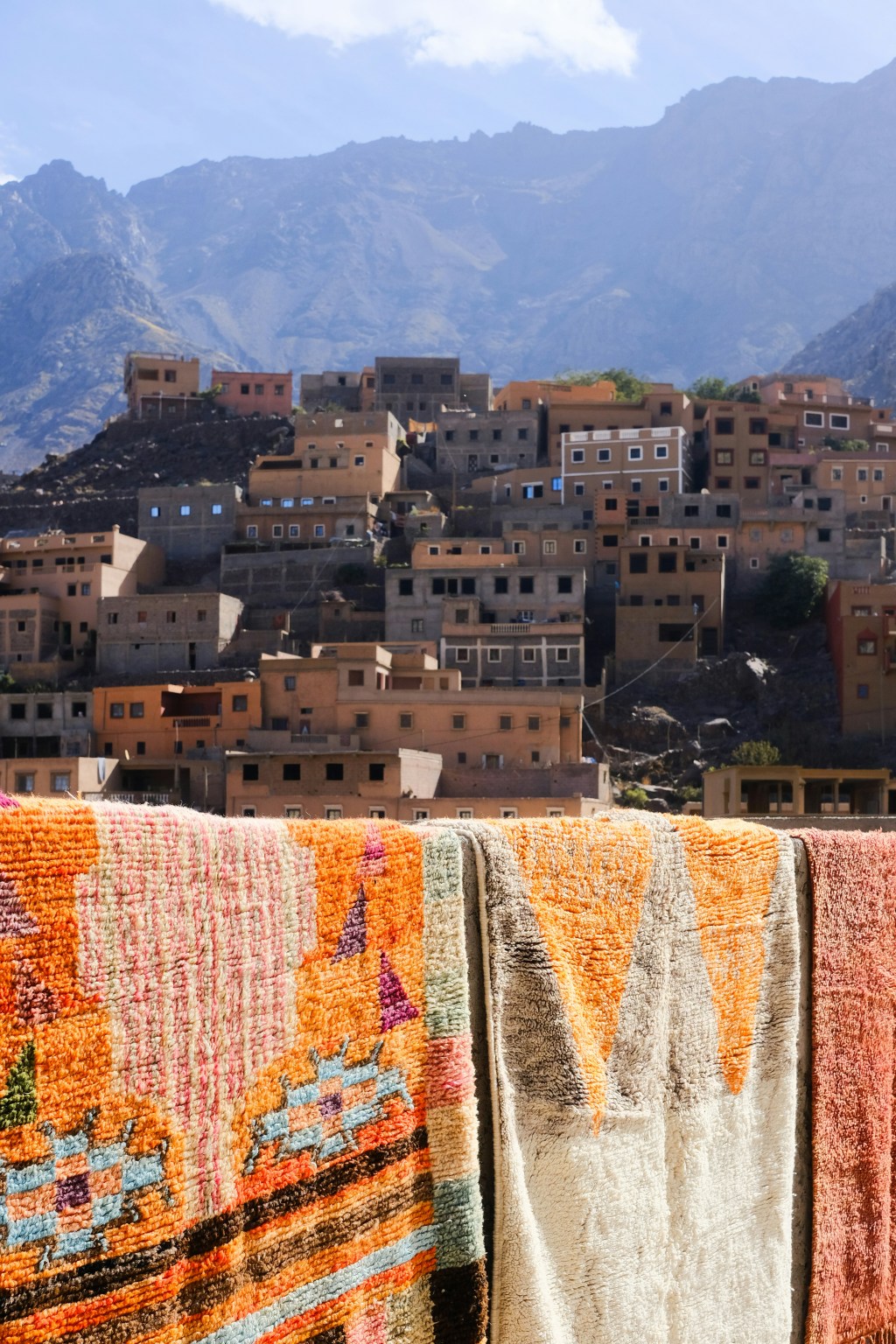
There’s something about getting out of Marrakech for a day that makes you feel as though you’ve stepped into an entirely different Morocco. One minute, you’re navigating the glorious chaos of the medina, dodging motorbikes, negotiating over leather slippers, and wondering whether that man with the monkey has any intention of letting you pass without a photograph. The next, you’re winding your way into the Atlas Mountains, where the air is cooler, the roads are quieter, and the scenery makes you wonder why you don’t spend every holiday walking up mountains.
Our day began with an early pickup outside Marrakech, with the usual holiday combination of enthusiasm, slightly questionable footwear, and the vague hope that the phrase moderate hike meant something different in Morocco than it did back home.
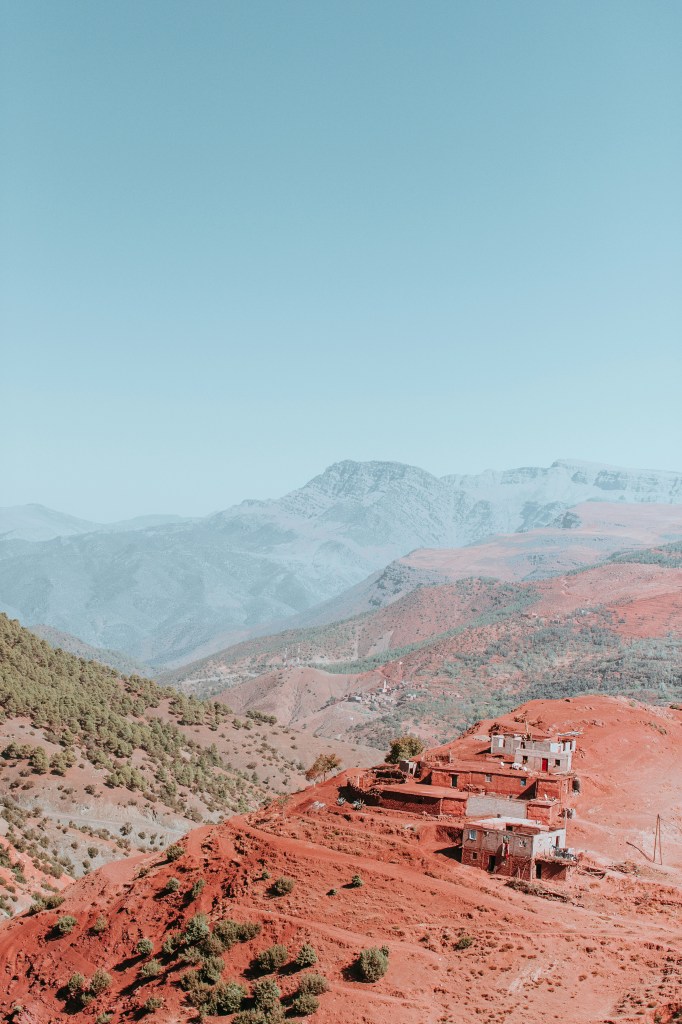
As we drove south, the city gradually gave way to open countryside. Terracotta buildings appeared against a landscape of olive groves and dusty fields, and before long, the mountains began to rise in the distance. The Atlas range looked almost theatrical, its enormous peaks shifting in colour from soft blue to earthy brown as the morning sun climbed higher.
Every so often, we passed small villages clinging to the hillsides, their houses built from the same reddish earth as the surrounding landscape. It was hard to believe that life in these villages carried on much as it had for generations, while just an hour or so away, Marrakech was busy selling tourists a fourth leather handbag they absolutely did not need.
Eventually, we arrived at our starting point, met our local guide, and set off on foot.
Into the mountains
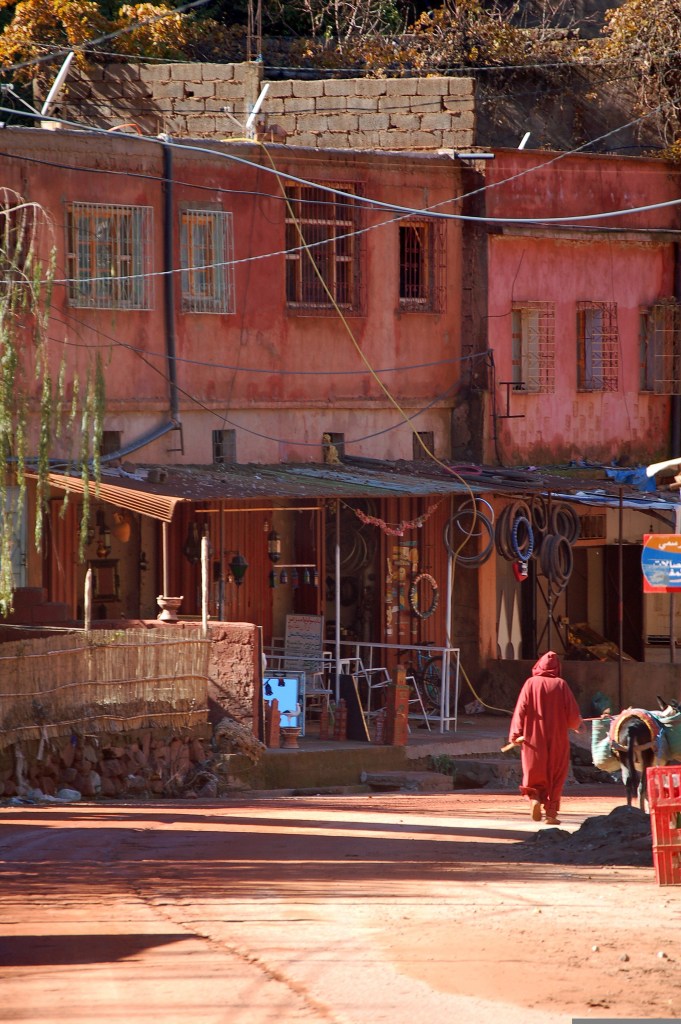
The trail wound through terraced fields, along narrow paths and past clusters of traditional Berber homes. There were no crowds, no souvenir stalls, and mercifully few people trying to sell us something. Instead, there was the sound of water trickling through irrigation channels, the occasional bray of a donkey, and the steady crunch of our boots on the rocky path.
Our guide seemed to know everyone. He greeted people as we passed, exchanged a few words with a farmer working in his field, and pointed out details we would otherwise have missed. A small patch of green tucked into an otherwise dry mountainside turned out to be a vegetable garden. A group of trees growing beside a stream were walnut trees, their branches providing welcome shade from the sun.
We walked past women carrying bundles of grass, men tending their livestock, and children who seemed perfectly capable of navigating steep paths that had us stopping to catch our breath.
I began to appreciate just how much effort everyday life in the mountains must require. Carrying water, tending crops, getting supplies from one village to another — things we take for granted at home become considerably more complicated when your nearest supermarket is a mountain drive away.
And the views? Absolutely worth the climb.
At one point, we stopped to look back across the valley. The mountains stretched away in layers, their ridges sharply defined against the sky. Below us, the village rooftops blended into the landscape, and tiny terraces carved into the hillsides revealed just how cleverly people had adapted to living here.
It was one of those moments when everyone falls quiet, not because there’s nothing to say, but because anything you could say would sound rather inadequate.
Naturally, the silence lasted approximately about 45 seconds before someone asked how much further we had to walk.
A lunch invitation we won’t forget
By lunchtime, we had worked up a respectable appetite. The sort of appetite that makes a packet of biscuits look like a three-course meal and leaves you wondering whether it would be socially acceptable to eat your guide’s emergency snacks.
Instead, we were invited to lunch at a local family’s home.
There is something rather special about being welcomed into someone’s home when you’re travelling. You can visit the grandest palace in the world, but sitting at a family’s table often tells you more about a place than any number of guidebooks ever could.
We stepped inside and immediately felt the temperature drop. The house was simple and welcoming, with colourful rugs, cushions, and a low table set out for the meal. The family greeted us warmly, and before long, we were settling in, grateful for the chance to rest our legs.
Then came the tagine.
If you’ve eaten Moroccan food in a restaurant, you might think you know what to expect. But there’s something about a homemade meal, prepared slowly and served in the place where the recipe belongs, that makes it taste different.
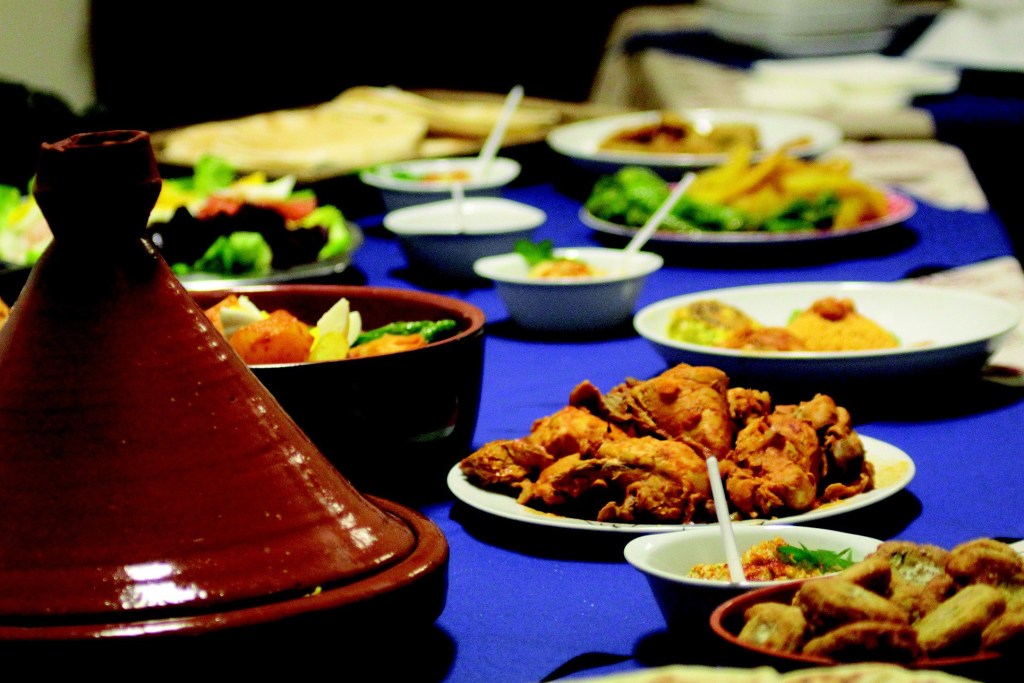
Our lunch was chicken tagine, cooked in a traditional conical clay pot, with tender pieces of chicken surrounded by onions, vegetables, fragrant spices, and a rich sauce that had clearly been given plenty of time to develop. Depending on the family’s recipe, there might be preserved lemon and olives adding a deliciously salty, tangy flavour.
The lid was lifted, and the aroma alone was enough to silence the table.
For a few minutes, conversation gave way to the important business of eating.
The chicken was wonderfully tender, the sauce rich without being heavy, and the vegetables had absorbed all those warming Moroccan flavours. Bread was passed around for scooping up the sauce, which is not only delicious but also a practical way of avoiding the need to lick your plate in front of your hosts.
Although, frankly, the temptation was there.
We ate together, talked as best we could across the language barrier, and learned a little about life in the village. There was no elaborate presentation or attempt to make the experience feel like a tourist attraction. It was simply a family sharing a meal with visitors who had arrived hungry from the mountains.
And somehow, that made it all the more memorable.
Of course, no Moroccan lunch would be complete without mint tea. Sweet, fragrant, and served in small glasses, it arrived with the sort of generosity that makes you feel you could sit there for the rest of the afternoon.
We probably could have.
But there were still mountains to explore, and our legs had enjoyed quite enough sitting down for one day.
The long way back
After lunch, we thanked our hosts and headed back onto the trail.
The afternoon light had softened, casting long shadows across the valley and turning the mountains a deeper shade of ochre. The walk back seemed different somehow. Perhaps it was the full stomach, perhaps the tea, or perhaps the realisation that we had spent the morning seeing a little of Morocco beyond its famous cities.
We passed more fields, followed the trail above a stream, and stopped occasionally to admire the view. Our guide pointed out more details along the way, and we found ourselves paying closer attention to the everyday things: the way water was channelled through the fields, the construction of the houses, the small gardens tucked into the hillsides.
There were moments when the path steepened and our enthusiasm briefly faltered. Nothing dramatic, of course. We were hiking, not attempting to summit Everest. Still, there is a particular kind of honesty that emerges when you’re climbing uphill after a substantial lunch.
The conversation tends to become less philosophical and more along the lines of, “Are we nearly there?”
Eventually, we made our way back to the village where our driver was waiting.
We climbed into the vehicle with tired legs, dusty shoes, and the deeply satisfying feeling of having earned our dinner. As we drove back towards Marrakech, the landscape gradually flattened, the traffic increased, and the familiar bustle of the city began to reappear.
Why this day stayed with me
There are plenty of ways to experience Morocco. You can wander the souks of Marrakech, admire intricate architecture, spend an afternoon in a hammam, or enjoy a rooftop dinner as the call to prayer drifts across the city.
All of those things are wonderful.
But a day hiking in the Atlas Mountains offers something a little different. It gives you a glimpse of a quieter, more rural side of the country, where the landscape dictates the pace of life and hospitality is expressed through simple, generous gestures.
For me, the highlight wasn’t necessarily the spectacular scenery, although that was certainly a close second. It was the lunch at a local home. Sitting around a table, eating chicken tagine, sharing mint tea, and being welcomed by people who had no particular reason to make strangers feel at home was a reminder of why travelling can be so rewarding.
You arrive thinking you’re going for a walk and end up with a much richer experience than you expected.
And if you’re wondering whether a hike followed by a generous serving of chicken tagine is a good combination, I can confirm that it is. The only slight problem is that once you’ve eaten homemade Moroccan food in the Atlas Mountains, a sandwich at your desk back home may never quite measure up.
My advice? If you’re visiting Marrakech, set aside a day for the mountains. Take comfortable walking shoes, bring water, listen to your guide, and leave enough room for lunch.
Especially lunch.
Because sometimes the best travel memories aren’t made at the top of a mountain or in front of a famous landmark. Sometimes they’re made around a family table, with a steaming tagine in the middle, a glass of sweet mint tea in your hand, and the feeling that, for a little while, you’ve been welcomed into someone else’s world.

