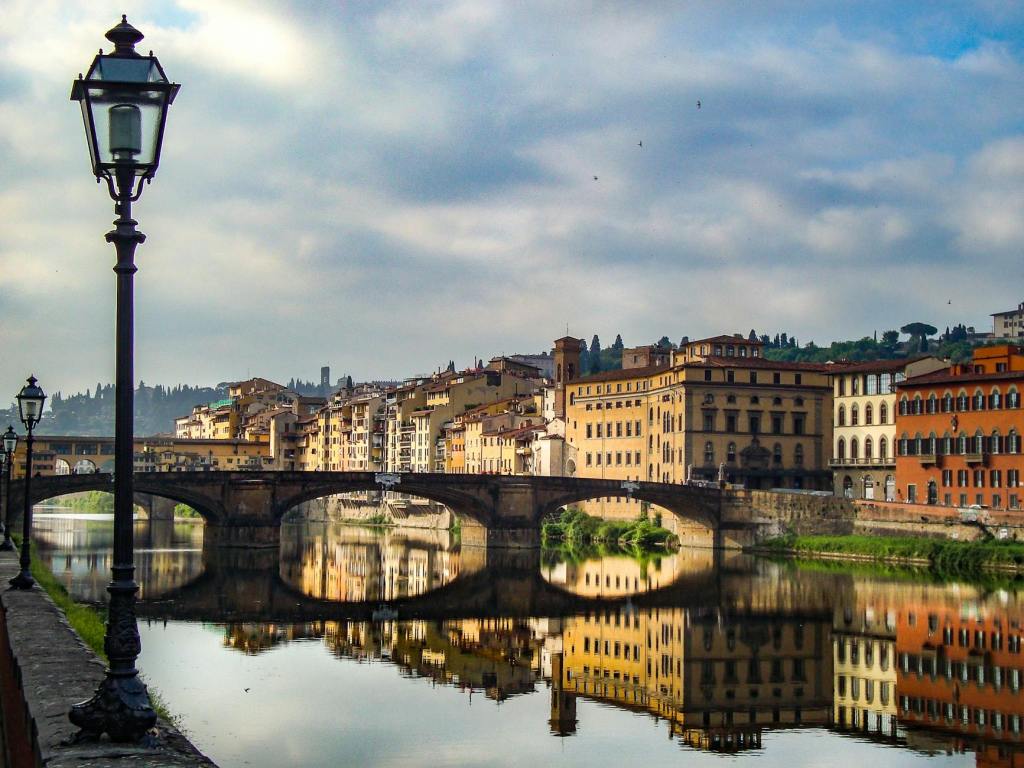
Oh, Florence… where do I even start? Imagine a city that’s basically a living museum—you don’t just see history here, you walk through it. Everywhere you turn, there’s something breathtaking: a Renaissance masterpiece tucked into a tiny church, a terracotta rooftop glowing in the sun, a narrow cobblestone street leading to a secret piazza. It’s one of those cities that makes you feel alive and curious at the same time.
The art alone is reason enough. Florence is the birthplace of the Renaissance, so we’re talking Michelangelo, Leonardo da Vinci, Botticelli—all in one city. You can stand in front of David, wander through the Uffizi, and get lost in centuries of human creativity. But it’s not just about museums; the beauty is everywhere. The Duomo, the Ponte Vecchio, the Piazzale Michelangelo—these aren’t just tourist spots, they’re experiences that stick with you.
And then there’s the food. Florence is in Tuscany, so expect hearty pastas, incredible steaks, fresh olive oil, local wines, and gelato that makes you want to linger in every piazza. Even a simple espresso in a sunny square feels like an event.
What’s special is that Florence isn’t just a place to look at—it’s a place to feel. You can get swept up in the grandeur of its history, but also slow down and wander the quieter streets, discover artisan workshops, or watch the sunset over the Arno. It’s intimate, vibrant, romantic, and endlessly inspiring all at once.
What to do with 3 days in florence
Day 1 – The Classics
The Duomo
Start with the Duomo—Florence’s crown jewel; it’s the heart of Florence. Go inside the cathedral, check out the Baptistery with its golden doors, and if you’ve got the energy, climb Brunelleschi’s Dome for that unforgettable rooftop view. (If you want slightly fewer stairs, Giotto’s Bell Tower is another great option right next door.)
Officially it’s called Santa Maria del Fiore, but everyone just calls it the Duomo. From the outside, it’s impossible not to stare: the cathedral is wrapped in this intricate marble facade of pink, green, and white, with detailed sculptures and patterns that make it feel almost too beautiful to be real.
But the real showstopper? Brunelleschi’s Dome. When it was built in the 1400s, people thought such a massive dome couldn’t be done. Brunelleschi basically invented new engineering techniques to pull it off, and it still dominates the Florence skyline today.
Climbing it is an experience all on its own. It’s about 463 steps, winding through narrow staircases and tight passageways—but trust me, it’s worth it. Along the way, you get these amazing close-up views of the frescoes inside the dome—Giotto’s angels and scenes of the Last Judgment—and then, when you finally step out on top… the view of Florence is breathtaking. You see terracotta rooftops, the Arno River, Ponte Vecchio, and rolling Tuscan hills stretching into the distance.
Even if you don’t climb, the Duomo itself is incredible inside. The cathedral floor is decorated with intricate marble designs, and the stained glass windows let in soft, colorful light that feels almost magical.
So whether you’re into architecture, history, or just jaw-dropping views, the Duomo and Brunelleschi’s Dome are a Florence must-see. It’s one of those spots where you can really feel the city’s Renaissance heart beating.
Piazza Della Signoria & Palazzo Vecchio
Next stop, the Piazza della Signoria. If the Duomo is the heart, then this square is basically the heartbeat of Florence. Step into it, and it feels like you’ve wandered into an open-air museum. Statues are everywhere, from the replica of Michelangelo’s David to the dramatic figures of Neptune, Hercules, and other Renaissance icons. Even the atmosphere is buzzing, with locals and tourists mingling, street performers, and the occasional café spilling out onto the square.
Right on the piazza stands Palazzo Vecchio, Florence’s historic town hall and fortress-like palace. Its massive tower rises above the square, giving the whole area a kind of commanding presence. Inside, the palace is like stepping into a time capsule: opulent chambers, gilded ceilings, and enormous halls adorned with frescoes by Renaissance masters. You can wander through the Salone dei Cinquecento, the grand hall where important city councils met, and imagine the debates and decisions that shaped Florence.
What’s fun is that Palazzo Vecchio isn’t just a museum—it’s still a symbol of Florence’s civic life. You can even climb the tower for another amazing panoramic view of the city, if you’re up for it. And while you’re in the piazza, take a moment to look up and around; every corner has a story, every statue a legend.
So Piazza della Signoria and Palazzo Vecchio are a perfect mix of history, art, and the lively pulse of modern Florence—it’s one of those spots where you can just soak it all in, people-watch, and feel the Renaissance come alive around you.
The Uffizi Museum
The Uffizi Gallery—this is one of those places where even if you’re not a hardcore art lover, you’ll still feel completely blown away. It’s one of the most famous art museums in the world, and for good reason. Walking through it is like strolling through a living timeline of the Renaissance, with masterpieces by Botticelli, Leonardo da Vinci, Michelangelo, Caravaggio, and so many more.
The building itself is fascinating—it was originally designed in the 1500s as offices for Florence’s magistrates (hence the name “Uffizi,” meaning “offices”). Over time, it became a gallery to display the Medici family’s incredible art collection, and now it’s a treasure trove that draws visitors from all over the world.
Inside, you’ll want to take your time, because every room feels like a story unfolding. Botticelli’s Birth of Venus and Primavera are show-stoppers—you’ll probably stop mid-step just to stare. Then there are da Vinci’s drawings, Caravaggio’s dramatic use of light and shadow, and rooms filled with sculptures and portraits that transport you straight to Renaissance Florence.
Pro tip: the Uffizi can get super crowded, especially around the big-name paintings. If you can, go early in the morning or book a skip-the-line ticket so you’re not jostling for a view of Venus’s flowing hair! Also, take a moment to look out the windows—they frame the Arno River and Ponte Vecchio beautifully, giving you a mini sightseeing bonus while you explore the art.
Basically, visiting the Uffizi isn’t just about seeing paintings; it’s about feeling the heartbeat of Florence’s artistic legacy and getting up close to works that shaped the entire course of Western art. Even a quick visit leaves you inspired and a little awestruck.
Then in the evening take a leisurely stroll along the Ponte Vecchio at sunset, maybe stop for a glass of wine while watching the Arno reflect the city lights. It’s magical!
Day 2 – Renaissance & Views
Accademia Gallery
The Accademia Gallery—this is where Florence really flexes its Renaissance muscles! The star of the show, of course, is Michelangelo’s David. And let me tell you, seeing it in person is completely different from any photo you’ve ever seen. It’s massive, it’s perfectly proportioned, and the detail is insane—you can literally see the tension in his muscles and the intensity in his gaze. Standing there, you can’t help but feel a little in awe.
But the Accademia isn’t just about David. There are other sculptures by Michelangelo, along with works by 14th- and 15th-century Florentine painters. There’s even a fascinating collection of musical instruments in the later rooms, which you don’t always expect in an art gallery. The space itself feels intimate, which is a nice contrast to the sprawling Uffizi—you can really take your time with each piece.
Here’s a little insider tip: David gets all the attention (and rightly so), but don’t rush past the smaller sculptures and paintings. Many of them give you a deeper sense of Florence’s artistic environment in Michelangelo’s time. And if you’re up for it, you can climb a small staircase to get a view of David from above—it’s a perspective most people miss.
Timing matters, too. The Accademia can get busy, especially around David, so early morning or a skip-the-line ticket is a lifesaver if you want to enjoy the gallery without jostling crowds.
All in all, visiting the Accademia is like stepping into a time capsule: one moment you’re admiring the genius of Michelangelo, the next you’re soaking in the artistic atmosphere that defined Renaissance Florence. It’s small enough to explore in a couple of hours but impactful enough to stay with you long after you leave.
Shopping & Lunch at The San Lorenzo Market & Mercato Centrale
You’ll have worked up an appetitie spending the morning going through the Accademia Galleria, so next stop lunch (and some shopping). No better place to do that than the San Lorenzo Market—this place is such a treat, especially if you love food, colors, and a little organized chaos. The market is basically Florence in a nutshell: lively, bustling, and full of surprises around every corner.
The market has two main parts. Outside, you’ve got the leather and souvenir stalls—perfect if you want a classic Florentine leather bag, belt, or wallet. The colors, textures, and sheer variety are impressive, and haggling a little is all part of the fun.
Inside, things get even more delicious. The Mercato Centrale is a food lover’s paradise. Think fresh pasta, cheeses, cured meats, olives, local wines, and even tiny spots to grab a panini or a quick espresso. It’s lively, smells incredible, and you can wander around sampling as you go. My favorite part? Just soaking in the buzz of locals and tourists mingling, while tasting some of the best produce and prepared foods Florence has to offer.
If you’re visiting for lunch, the upstairs of the Mercato Centrale has small eateries and bars where you can sit and try everything from pizza and pasta to gelato and fresh pastries. It’s casual, fun, and a great way to recharge before heading back out to explore the city.
Honestly, San Lorenzo Market isn’t just shopping or eating—it’s an experience. You get to see the city’s flavors, craftsmanship, and daily life all in one spot. Even if you’re not buying anything, walking through the market is a feast for your senses: the sights, smells, and sounds really capture the heart of Florence.
Stroll Over to Oltrarno & Piazzale Michelangelo
Oltrarno—this is one of my favorite parts of Florence, and it feels like a little secret compared to the tourist-packed city center. The name literally means “beyond the Arno,” because it’s the neighborhood on the other side of the river. Step across the Ponte Vecchio, and suddenly the vibe changes: it’s quieter, more local, and has this charming, lived-in feel.
Oltrarno is famous for its artisan workshops. You’ll see craftspeople making everything from leather goods and jewelry to traditional Florentine paper. It’s a great place to pick up something handmade while watching the artisans at work—it feels authentic, like you’re seeing Florence in its everyday rhythm.
There are also hidden piazzas and churches scattered throughout the neighborhood. Santa Maria del Carmine is home to the Brancacci Chapel, which has stunning frescoes by Masaccio—one of those “wow, this is real” moments for art lovers. And even just wandering the streets, you’ll notice the colorful shutters, ivy-covered walls, and small cafes where locals linger over espresso.
The highlight for many is Piazzale Michelangelo, a short climb or bus ride from Oltrarno. We actually walked up, and it was enjoyable. If you’re reasonably fit, it’s not a difficult jaunt. From there, you get the classic panoramic view of Florence, with the Duomo, the Arno River, and the city’s rooftops stretching out like a painting. It’s especially magical at sunset.
Evenings in Oltrarno are fantastic. The streets are lined with cozy trattorias, wine bars, and gelaterias, and it’s a bit quieter than the city center, so you can enjoy a slower, more relaxed Florence vibe.
Basically, Oltrarno is where you feel the heartbeat of local Florence—artisans, history, charming streets, and incredible views all in one place. It’s the perfect spot to slow down and explore beyond the major tourist sites.
In the evening grab some dinner in Oltrarno, maybe try a local trattoria for bistecca alla fiorentina.
Day 3 – Hidden Gems & Relaxation
Santa Croce Basilica
Plan a visit to Santa Croce Basilica—this is one of those Florence spots that feels both grand and personal at the same time. It’s huge and stunning, with that classic Gothic façade, but once you step inside, it’s like walking into a place that’s alive with history.
One of the coolest things about Santa Croce is that it’s the resting place of some of Florence’s greatest minds. Michelangelo, Galileo, Machiavelli—they’re all buried here. Just standing there, you can feel the weight of history and genius in the air. The tombs and memorials are beautifully decorated, and each tells a story about the person’s life and impact.
The church itself is gorgeous inside: tall arches, frescoes on the walls, and stained glass that fills the space with soft, colorful light. One of the highlights is the series of frescoes by Giotto, which are still vibrant after hundreds of years.
But it’s not just about looking at art or tombs—the square outside, Piazza Santa Croce, is lively and charming. Cafés spill out onto the cobblestones, street performers add to the atmosphere, and it’s a great spot to stop and soak up the local vibe.
What makes Santa Croce special is that it blends history, art, and culture with everyday life. It’s not just a monument; it’s a place you can feel, where centuries of Florentine life intersect.
The Boboli Gardens
the Boboli Gardens—they’re like Florence’s secret escape when you need a break from the bustling piazzas and narrow streets. Imagine stepping into this vast, green Renaissance wonderland tucked right behind the Pitti Palace. It’s not just a garden—it’s more like an open-air museum of landscaping, sculptures, and fountains, all spread across rolling hills.
Walking through, you’ll find winding paths shaded by tall cypress trees, hidden grottoes that feel almost magical, and grand fountains that suddenly appear around a corner. The gardens are dotted with statues and ancient Roman antiquities, so as you stroll, it feels like you’re moving through a mix of nature and art.
One of the best parts? The views of Florence. From different terraces, you’ll see the city’s terracotta rooftops with the Duomo rising above them, framed by the Tuscan hills beyond—it’s postcard-perfect.
The gardens are big, so it’s a place where you can easily spend a couple of hours just wandering, picnicking, or even finding a quiet bench to relax. It’s a totally different vibe from the Uffizi or the Duomo—it’s about slowing down, breathing fresh air, and soaking in the Renaissance idea of beauty not just in buildings, but in nature too.
If you go in spring or summer, the gardens are especially gorgeous, with flowers in bloom and sunlight filtering through the trees. But honestly, they’re beautiful year-round and always feel like a bit of a hidden gem away from the busiest tourist crowds.
Gelato & Evening Stroll
End your trip the Florentine way—gelato in hand, wandering cobbled streets, maybe stopping at a quiet piazza to watch the city glow as night falls.
In short, you should visit Florence because it’s the kind of city that stays with you. It’s a feast for your eyes, your taste buds, and your imagination. It’s a trip you’ll remember always, and you’ll likely want to return again and again and again. Italy just has that affect on most people, and Florence is a glorious place to start your Italy adventures! Happy Trails!
 a travel blog to HELP guide you on your next ADVENTURE
Leave a Reply