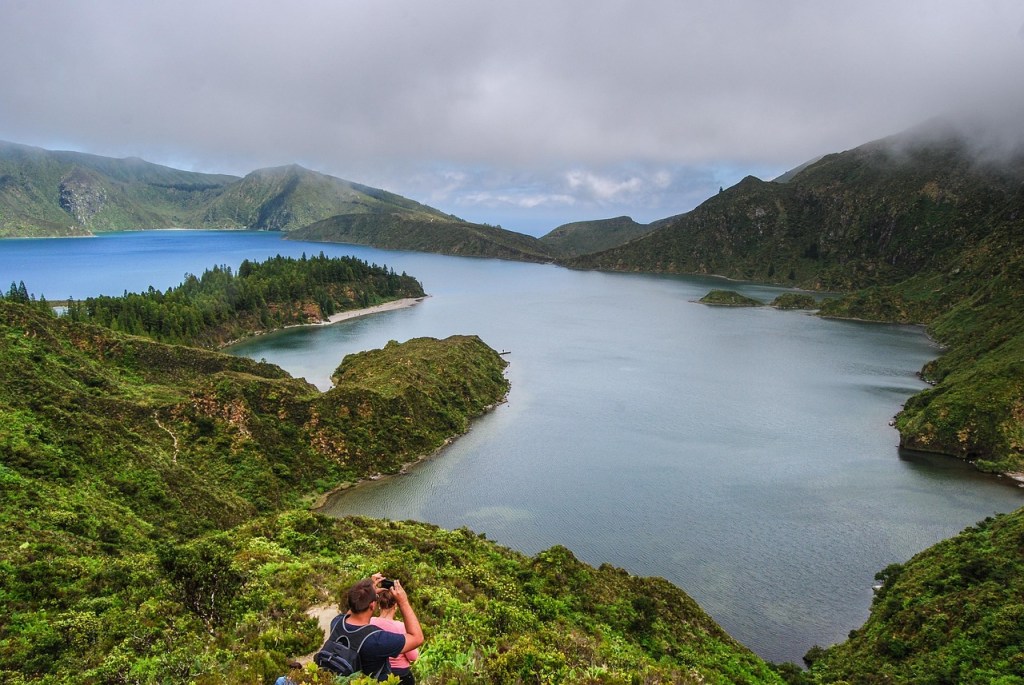
The Azores are an archipelago located in the North Atlantic Ocean and are an autonomous region of Portugal. Comprising of nine islands, the Azores are known for their stunning landscapes, diverse ecosystems, and rich cultural heritage.
The Azores are situated about 1,500 kilometers (933 miles) west of mainland Portugal and about 3,400 kilometers (2,113 miles) from North America.
These nine islands are divided into three groups: the Eastern Group (São Miguel and Santa Maria), the Central Group (Terceira, Graciosa, São Jorge, Pico, and Faial), and the Western Group (Flores and Corvo).
São miguel island
São Miguel is the kind of place that feels like nature turned the volume all the way up. It’s the biggest island in the Azores, and people often call it the “Green Island” because everywhere you look it’s just rolling hills, volcanic craters, and lush pastures dotted with cows. But it’s not just pretty—it’s full of these little surprises that make it feel almost otherworldly.
The coastline is rugged, dramatic, and full of hidden gems. You’ll find natural hot water pools right by the ocean, like at Ponta da Ferraria, where volcanic hot springs mix with the sea. On the other end of the spectrum, there are black-sand beaches perfect for surfing, like in Ribeira Grande, which is the island’s second biggest town.
What I love most about São Miguel is the variety. In a single day you could watch whales in the Atlantic, hike around a crater rim, swim in a natural hot spring, wander through tea fields, and end the evening with a cozy meal in a small fishing village. It feels like several destinations packed into one island.
So, if you’re thinking of going to the Azores, São Miguel is the perfect starting point—it has a little bit of everything that makes the archipelago special.
TOP THINGS TO DO ON são miguel ISLAND
explore ponta delgada
Ponta Delgada is kind of like the gateway to the Azores—it’s the main city on São Miguel, and chances are if you’re flying in, this is where you’ll land. At first glance it feels like a small, laid-back city by the ocean, but spend a little time wandering and it really grows on you.
The heart of the city is super walkable, with cobbled streets, black-and-white mosaic sidewalks, and historic churches tucked between little cafés and shops. One of the most recognizable landmarks is the Portas da Cidade, these big arched city gates right in the main square, which are especially pretty when lit up at night.
What’s nice about Ponta Delgada is that it has a mix of old-world charm and a modern vibe. You’ll find centuries-old churches like Igreja de São José and Igreja Matriz de São Sebastião, but also trendy restaurants, cozy wine bars, and oceanfront promenades where you can sit with a coffee and just watch the world go by.
Food is a big part of the experience here. You can try fresh seafood, Azorean cheeses, and the island’s famously sweet pineapples (they’re grown in greenhouses nearby). And if you’re into nightlife, Ponta Delgada is as lively as it gets in the Azores—bars, live music, and plenty of spots where locals and visitors mix.
Another perk? From Ponta Delgada, you’re close to so many day trips. You can head west to Sete Cidades, east to Furnas, or south to the beaches and tea plantations, which you’ll learn more about in this article. But the city itself has its gems too—like the Carlos Machado Museum if you’re into history and culture, or the marina where a lot of whale watching tours start.
It’s not a “big city” in the way Lisbon or Porto feels—it’s more like a friendly hub where you can soak up Azorean culture, grab amazing food, and use it as a jumping-off point for exploring São Miguel.
Discover Local History and Culture
Stroll Along the Harbor
- Marina: Walk along the waterfront to enjoy views of the sea, fishing boats, and yachts. There are often local vendors and cafés where you can relax.
- Cruise Tours: Consider booking a tour that departs from the marina to explore the nearby coastline or for whale watching.
Sample Local Cuisine
- Restaurants and Cafés: Enjoy traditional Azorean dishes at local restaurants. Don’t miss trying the famous Cozido das Furnas or fresh seafood.
- Market Visit: Stop by Mercado da Graça, a local market that offers fresh produce, local cheeses, and delicacies. It’s an excellent place for a casual lunch and to shop for souvenirs.
Explore the Gardens
- Antonio Borges Garden: This beautiful botanical garden features a variety of plants, walking paths, and scenic views. It’s a peaceful spot to take a break from sightseeing.
- Palace of Sant’Ana: Nearby in the same area, the gardens surrounding this palace offer lovely views and a chance to appreciate the local flora.
Use Public Transport or Rent a Car
- Public Transport: Ponta Delgada has a decent public transport system, including buses that connect to surrounding areas.
- Car Rental: To explore the island at your own pace, consider renting a car. This will allow you to visit attractions off the beaten path.
Take Part in Events and Festivals
- Cultural Events: Check the local calendar for events, festivals, or concerts during your visit, showcasing Azorean traditions and culture.
Visit Lagoa das sete cidades
Picture this—you’re standing on the edge of a massive volcanic crater, looking down at two shimmering lakes, one deep blue and the other a rich green, separated only by a narrow bridge. That’s Lagoa das Sete Cidades, one of the most iconic places in the Azores, and honestly, it feels like something out of a storybook.
The lakes sit inside a huge caldera on São Miguel Island, and there’s even a local legend that makes the scene more magical: a green-eyed princess and a blue-eyed shepherd fell in love but were forbidden to be together. Their tears formed the two lakes—one green, one blue. Whether you believe the tale or not, it definitely adds to the atmosphere when you’re gazing over the crater rim.
Most people start at the Vista do Rei viewpoint. It’s the classic postcard shot, with both lakes side by side. But if you’re up for a bit of adventure, hike up to Boca do Inferno. The view there is even more dramatic, and on a clear day you’ll see rolling hills, crater rims, and both lakes glowing in their colors. The catch? Weather in the Azores changes in a heartbeat—fog can roll in and hide everything. So it’s always smart to check the forecast or webcams before you set out.
Once you’re down by the lakes, the vibe is really peaceful. You can rent a kayak or paddleboard and float between the two lakes, or hop on a bike and circle the shoreline on easy trails. If you’re more into hiking, there are trails that take you around the rim or down into the village of Sete Cidades, which is tiny but charming, with a few spots to grab coffee or sit by the water for a picnic.
Timing matters too. In the summer months, the roads leading to the crater are lined with blooming blue and purple hydrangeas—it’s stunning. And if you can, go early in the morning for the clearest skies, or late afternoon for golden light and fewer crowds.
Getting there is simple if you have a car—it’s only about a 40-minute drive from Ponta Delgada. And honestly, renting a car is the best way to explore São Miguel anyway, since so many of the viewpoints and trails aren’t really accessible by public transport.
So, if you’re planning a trip, I’d say: start your day with the classic viewpoint, maybe pack a picnic, spend some time on the water or cycling by the lakes, then wrap it up with a sunset at Boca do Inferno. It’s one of those places that doesn’t just look beautiful—it really feels magical.
Difficulty Level:
- Beginner to Intermediate: Most of the trails around Lagoa das Sete Cidades are considered moderate in difficulty. Some trails can include steep sections, but they are generally well-marked and accessible for most hikers.
Best Time to Visit:
- Spring and Autumn: The best time to hike in this area is during the spring (April to June) and early autumn (September to October) when temperatures are mild and the scenery is particularly beautiful.
- Avoiding Rain: Weather conditions can change quickly, so be prepared for variable weather, especially in the warmer months. Rain is more common in winter.
Tips for Hiking:
- Wear Appropriate Gear: Good hiking shoes and weather-appropriate clothing are essential. Bring layers, as it can be cool and windy, even in summer.
- Hydration and Snacks: Carry plenty of water and snacks to keep your energy levels up during your hike.
- Respect Nature: Stay on marked trails to protect the natural environment and follow local guidelines.
Facilities and Accessibility:
- Visitor Center: There is a small visitor center near the Lagoa das Sete Cidades, where you can gather information on trails and local flora and fauna.
- Access: The area is easily accessible by car, and parking is available nearby.
Hiking around Lagoa das Sete Cidades offers a fantastic opportunity to connect with nature, enjoy stunning views, and experience the unique volcanic landscape of the Azores. Whether you’re a seasoned hiker or a casual walker, this picturesque setting is sure to impress.
relax in furnas
If Sete Cidades feels like a fairytale crater, then Furnas feels like stepping into a natural spa tucked inside a volcanic valley. Honestly, it’s one of the most unique spots in the Azores, and totally worth visiting.
First off, the whole town smells faintly of sulfur—don’t let that scare you, it’s just because of the geothermal activity bubbling under the surface. You’ll see steam vents, boiling mud pools, and hot springs right in the middle of the town. It’s like nature showing off. And the cool thing is, people here use that volcanic heat for cooking. There’s a local dish called Cozido das Furnas—basically a huge stew of meats and veggies—that’s buried in the hot ground and slow-cooked by the earth itself. It takes hours, and when they dig it up and serve it, it feels like you’re literally eating from the volcano.
Then there are the hot springs where you get to relax. The most famous is Terra Nostra Park, which has this massive orange-brown thermal pool set in a beautiful botanical garden. The water is rich in minerals (and yeah, it stains your swimsuit, so don’t wear your favorite white one!), but sinking into that warm, silky water surrounded by lush greenery is just incredible. If you want something cozier, there are also smaller pools like Poça da Dona Beija, where you can soak in steamy rivers under the stars.
Furnas is also known for its lake, Lagoa das Furnas, which has this mystical vibe with a little chapel on the shore and more geothermal vents steaming away nearby. It’s a great place to walk or picnic.
And beyond all the hot springs and volcano vibes, the town itself is super charming—quiet streets, old churches, and plenty of cafés where you can try Azorean pastries with a coffee after your soak.
The best part? It’s only about a 40-minute drive from Ponta Delgada – the main town on São Miguel, so it makes a perfect day trip, though honestly you could easily spend a night or two there just to slow down and enjoy the hot springs at different times of day.
So, why visit Furnas? Because it’s this rare mix of relaxation, volcanic drama, and authentic Azorean culture—all wrapped up in one small town. It’s the kind of place where you can hike past steaming vents in the morning, soak in mineral-rich waters in the afternoon, and end the day eating a stew cooked by the earth itself. Pretty unforgettable, right?
Accessibility:
- Getting There: Furnas is easily accessible by car, and regular public transportation connects it to Ponta Delgada and other parts of São Miguel Island.
- Visitor Facilities: The village has various accommodations, restaurants, and visitor services to cater to tourists.
WHALE WATCHING
Whale watching off the coast of São Miguel is one of those experiences that feels both wild and humbling—you’re basically stepping into the animals’ world for a few hours. Because the Azores sit right in the middle of the Atlantic – on major migratory routes – the waters here are like a highway for whales and dolphins. That makes São Miguel one of the best spots in Europe (and honestly, the world) to see them.
What makes it so cool is the variety. You’ve got resident species, like sperm whales (yes, the giants from Moby Dick) and several types of dolphins that stick around year-round. Then, depending on the season, you can spot blue whales, fin whales, humpbacks, and even orcas passing through, especially in the spring. The blue whale sightings in particular are insane—seeing the largest animal that has ever lived glide past your boat is something you don’t forget.
The tours usually head out of Ponta Delgada or Vila Franca do Campo, and you can choose between a larger, more stable catamaran (better if you want comfort) or a smaller zodiac boat (faster, bumpier, and way closer to the action). Before you even go out, most companies give a little briefing about the species you might see and the marine conservation efforts happening in the Azores. Fun fact: back in the day, the Azores were actually a whaling hub, but now those same skills in spotting whales are used for eco-tourism instead of hunting.
When you’re out on the water, it’s not just whales—you almost always see dolphins too, sometimes racing alongside the boat or leaping out of the water. Some tours even combine whale watching with a stop at Ilhéu de Vila Franca do Campo, this volcanic islet with a natural swimming pool inside it.
Just be prepared: the ocean here can be choppy, so if you get seasick, it’s worth taking something beforehand.
The whole experience is less about “checking a box” and more about that awe factor—you’re sitting on a boat in the middle of the Atlantic, watching these massive, graceful creatures surface and blow mist into the air, knowing they could dive thousands of meters beneath you at any moment. It humbles you, in the best possible way.
Best Time to Whale Watch
- Spring to Autumn: The best months for whale watching generally span from April to October, with high season from mid-April to September. Different species are more commonly seen at different times:
- April to June: Sperm whales are frequently observed, along with the first signs of migratory species.
- July to September: Peak time for sightings of Humpback whales and other migratory species.
- October: Can still be good for spotting whales as they continue their migration.
Whale Watching Tours
- Operators: Various local companies offer whale watching tours from different islands, particularly São Miguel, Pico, and Faial. Tours are available on large boats, small zodiacs, and then there are sailing vessels available for your whale watching excursion.
- Guided Experience: Tours are usually led by experienced guides who provide information about the species observed, their behaviors, and conservation efforts. Many operators emphasize responsible whale watching to minimize impact on marine life. Those are the operators you want to do business with – the environmentally conscious.
Respect for Marine Life
- Guidelines: Most tour companies adhere to strict guidelines to ensure the safety and well-being of the whales and dolphins. This includes maintaining a respectful distance and minimizing noise.
- Conservation Efforts: The Azores have made significant strides in marine conservation, and many operators contribute to research and education about marine wildlife.
What to Expect
- Duration: Tours typically last from two to four hours, depending on the operator and location. Some longer excursions may also include swimming or snorkeling opportunities.
- Sightings: While sightings are common, they are not guaranteed. Most tours offer follow-up trips at no additional cost if no whales are seen during the initial trip.
Other Marine Experiences
- Dolphin Watching: Alongside whale watching, many tours also offer the chance to observe playful dolphins in their natural habitat.
- Snorkeling and Diving: Some operators combine whale watching with opportunities for snorkeling or diving around the rich marine ecosystems in the Azorean waters.
Whale watching in the Azores offers a once-in-a-lifetime opportunity to see majestic marine mammals in their natural environment. The stunning landscapes, knowledgeable guides, and commitment to conservation make this an enriching experience for nature lovers and wildlife enthusiasts alike.
EXPLORE THE LOCAL TEA PLANTATIONS
Here’s the cool thing about São Miguel: in the middle of all those volcanic craters, hot springs, and dramatic coastlines, you’ll suddenly stumble across… tea fields. And not just any tea fields—the only tea plantations in all of Europe. That’s already a good enough reason to check them out, right?
The two main ones are Gorreana and Porto Formoso, both on the north coast of the island. They’ve been growing tea here since the 1800s, and walking through the fields is kind of surreal. You’ve got these bright green rows of tea bushes stretching toward the Atlantic Ocean, with waves crashing in the distance. It feels like Asia and Europe and the Azores all rolled into one.
What’s great is that the plantations are super welcoming. At Gorreana, for example, you can wander through the fields on marked walking trails, peek inside the old factory where the leaves are still processed with antique machines, and then sit down for a free cup of tea in their tasting room. It’s simple, but really lovely—you get to sip the tea while looking out over the fields it came from.
Porto Formoso is a bit smaller, but it’s got this cozy, family-run feel, and they do guided tours that dive into the history of tea in the Azores. Plus, they sometimes serve it with local cakes, which makes it even better.
Even if you’re not a huge tea drinker, the plantations are worth visiting because of the landscape and the story behind them. They’re a reminder of how isolated but resourceful the Azores have always been—using the island’s volcanic soil and humid, mild climate to grow something you wouldn’t expect in Europe.
And bonus: the tea fields make for some seriously photogenic stops. If you hit them on a sunny day, the contrast of green fields, blue ocean, and volcanic hills in the background is stunning.
So, why go? Because it’s a mix of history, culture, beautiful scenery, and a hot cup of tea waiting at the end. Honestly, it’s one of those low-key experiences on São Miguel that feels authentic and grounding—like slowing down for a moment in the middle of all the big, dramatic landscapes.
Best time to visit THE AZORES
The best time to visit the Azores depends on what you are looking for in your travel experience. Here’s a breakdown of the seasons to help you decide:
Spring (March to May)
Mild weather, blooming flowers, and fewer tourists compared to the summer months make spring an excellent time for hiking and outdoor activities.
Temperatures range from 14°C to 20°C (57°F to 68°F).
Summer (June to August)
Warm temperatures, long days, and the best weather for outdoor activities such as hiking, whale watching, and swimming. This is the peak tourist season, so expect more visitors and higher prices.
Temperatures can range from 20°C to 25°C (68°F to 77°F), with some days peaking above 28°C (82°F).
Autumn (September to November)
Early autumn (September and October) offers pleasant temperatures and beautiful landscapes with autumn colors. Fewer tourists than in summer, making it easier to enjoy popular sites.
Temperatures range from 18°C to 24°C (64°F to 75°F) in September, cooling down to 14°C to 18°C (57°F to 64°F) by November.
Winter (December to February)
If you prefer a quieter experience and are interested in experiencing local culture, this can be a good time to visit. Accommodation prices may be lower, but be prepared for cooler and wetter conditions.
Temperatures range from 10°C to 15°C (50°F to 59°F). Rain is more frequent during this season.
The Azores offer a rich blend of history, culture, and natural beauty. By exploring the city’s landmarks, savoring local cuisine, and venturing into the surrounding landscapes, you can experience the essence of the Azores while enjoying memorable moments in this charming capital.
There’s so much to see and do for everyone. It’s a trip of a lifetime! Happy Trails!
 a travel blog to HELP guide you on your next ADVENTURE